AI-Powered Sourcing: Find Candidates While You Sleep

Recruiting in 2025: Fast, Costly, and Overwhelming
Hiring the right people is harder than ever.
Recruiters are flooded with CVs, inboxes overflow with messages, and teams spend countless hours scanning profiles that never fit.
Even if you have a sourcing team, the work remains repetitive and time-consuming.
They must search across LinkedIn, job boards, and databases, verify skills, send outreach, and log replies in your ATS.
As a result, your team loses valuable time that could be spent talking to qualified candidates instead of hunting for them.
The Hidden Cost of Manual Sourcing
Let’s look at what this actually costs.
For an SME or agency hiring for 5–10 roles per month:
- A single recruiter spends around 20 hours per week on sourcing.
- That’s 80 hours per month , or roughly 960 hours per year .
- At €30/hour, that equals €28,800/year in sourcing time alone.
Therefore, manual sourcing doesn’t just slow hiring, it drains resources and delays revenue from unfilled roles.
What Is AI-Powered Sourcing?
AI sourcing agents act as your virtual recruiting assistants. They don’t replace recruiters, instead, they handle repetitive tasks while your team focuses on conversations.
Here’s what they do automatically:
- Search for candidates matching your role criteria.
- Enrich profiles with verified contact data.
- Score & shortlist based on skills and seniority.
- Personalize outreach for each role.
- Sync results into your ATS , hands-free.
As a result, you get a continuous flow of qualified candidates, even while your team sleeps.
The Automated Sourcing Workflow
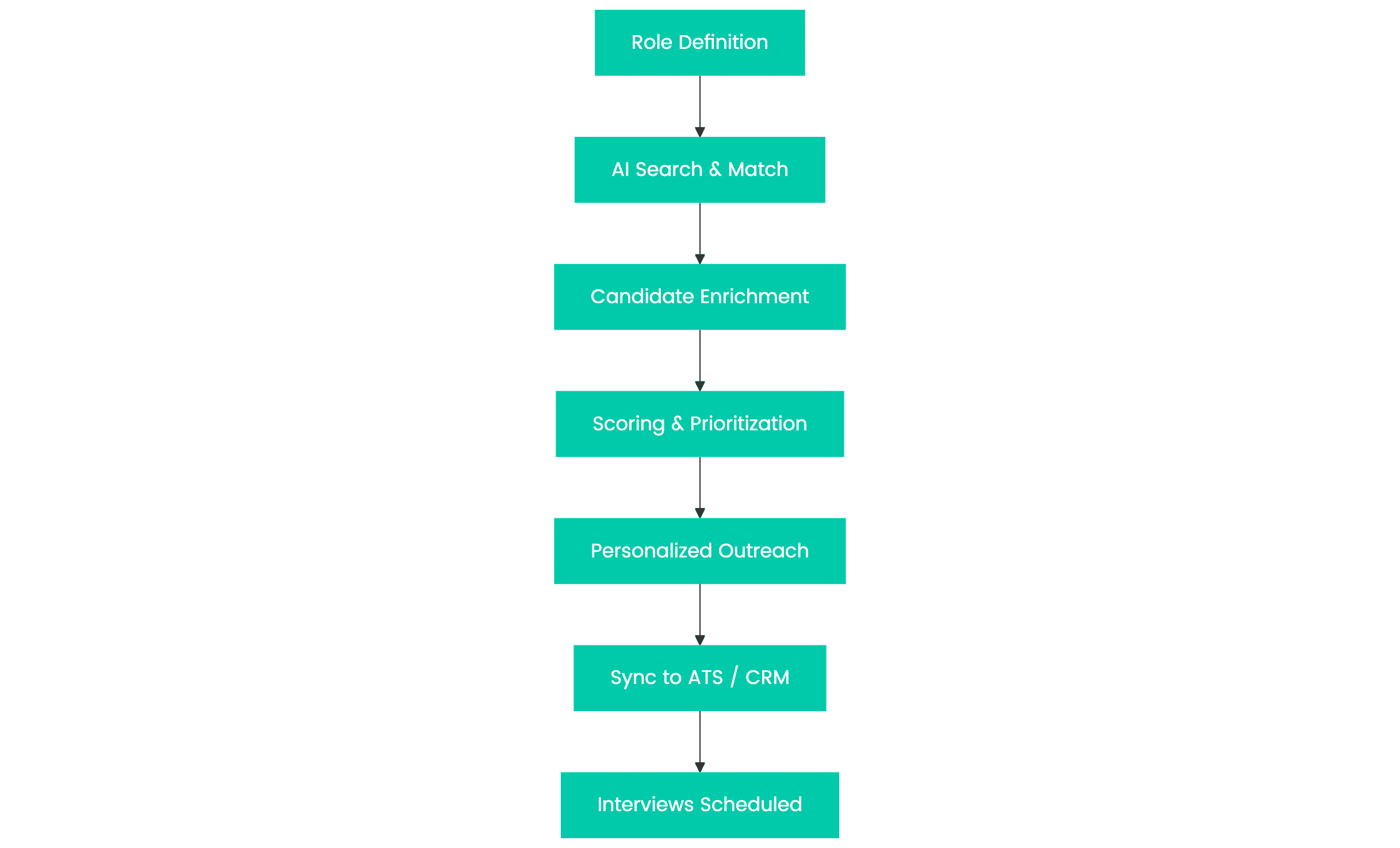
This system runs while your team sleeps, building talent pipelines overnight so recruiters wake up with pre-qualified candidates ready for review.
What Makes It Work: The Data Behind the Magic
AI sourcing isn’t about scraping the internet randomly, it’s about smart enrichment.
Each candidate record gets built from multiple verified data sources:
- Public profiles (LinkedIn, GitHub, Behance, etc.)
- Company websites and project portfolios
- Email verification APIs
- Skills and title normalization models (so “Sales Ninja” = “Sales Executive”)
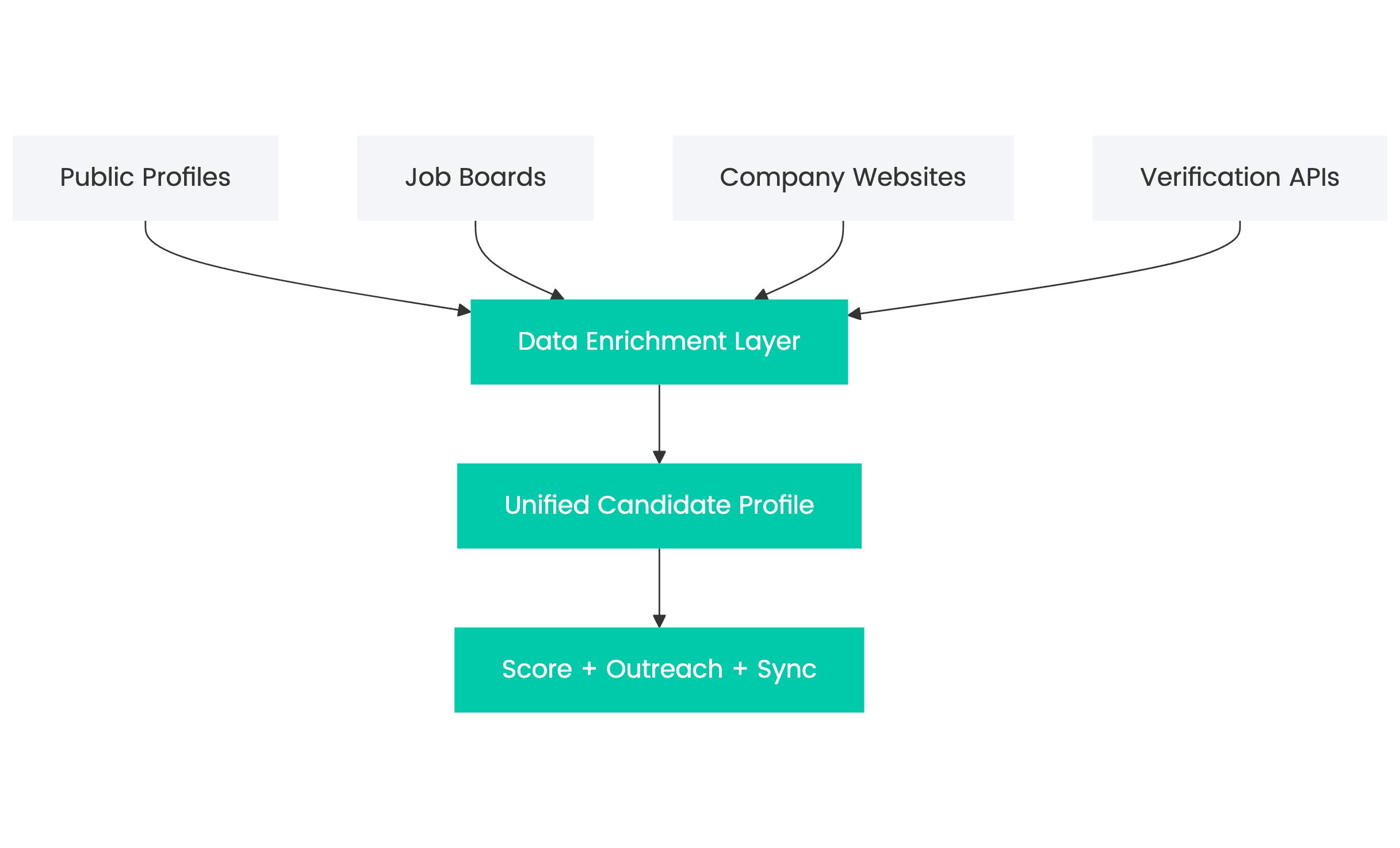
This structured pipeline ensures data quality and compliance, key to keeping outreach relevant and GDPR-safe.
Personalization at Scale
Once profiles are enriched, the sourcing agent automatically personalizes outreach using:
- The candidate’s role (“Hey Anna, your React portfolio stood out, we’re scaling our front-end team!”)
- Shared context (location, tech stack, seniority)
- Role-specific motivations (career growth, flexibility, impact)
Each message reads like it was written by a recruiter who actually did their homework, but it’s done at scale, across hundreds of candidates.
ROI: Time and Cost Savings
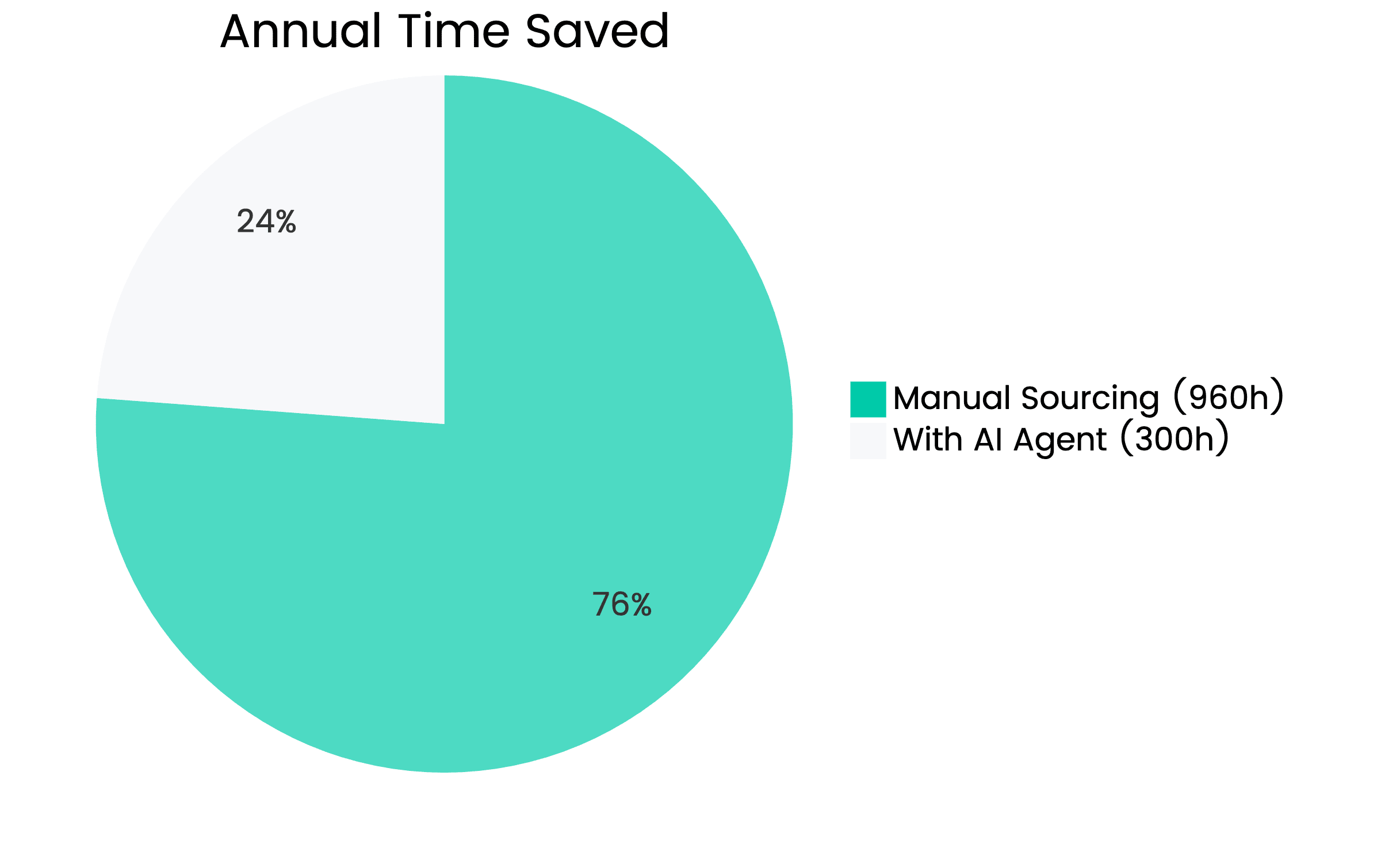
✅ Result:
- ~65–70% reduction in sourcing time.
- Recruiters focus on conversations, not spreadsheets.
- Faster hiring, lower burnout, happier clients.
For an agency or HR team, that can mean €15k–25k/year saved, per recruiter.
Why This Matters for SMEs & Agencies
Large companies can afford massive HR teams and tools. SMEs can’t.
AI sourcing levels the playing field, giving small teams the same reach and efficiency as enterprise setups.
And because these systems run 24/7, you’re not limited by working hours or manual effort.
Recruiters can literally wake up to a full candidate list, filtered, scored, and ready for outreach.
Final Thoughts
Hiring isn’t just about who you find, it’s about how fast and efficiently you find them.
AI sourcing agents automate the boring part of recruitment, so your team can focus on the conversations that matter.
The technology isn’t replacing recruiters, it’s giving them superpowers.
📩 Want to see how AI sourcing could work for your roles? Book a call with Invra.